
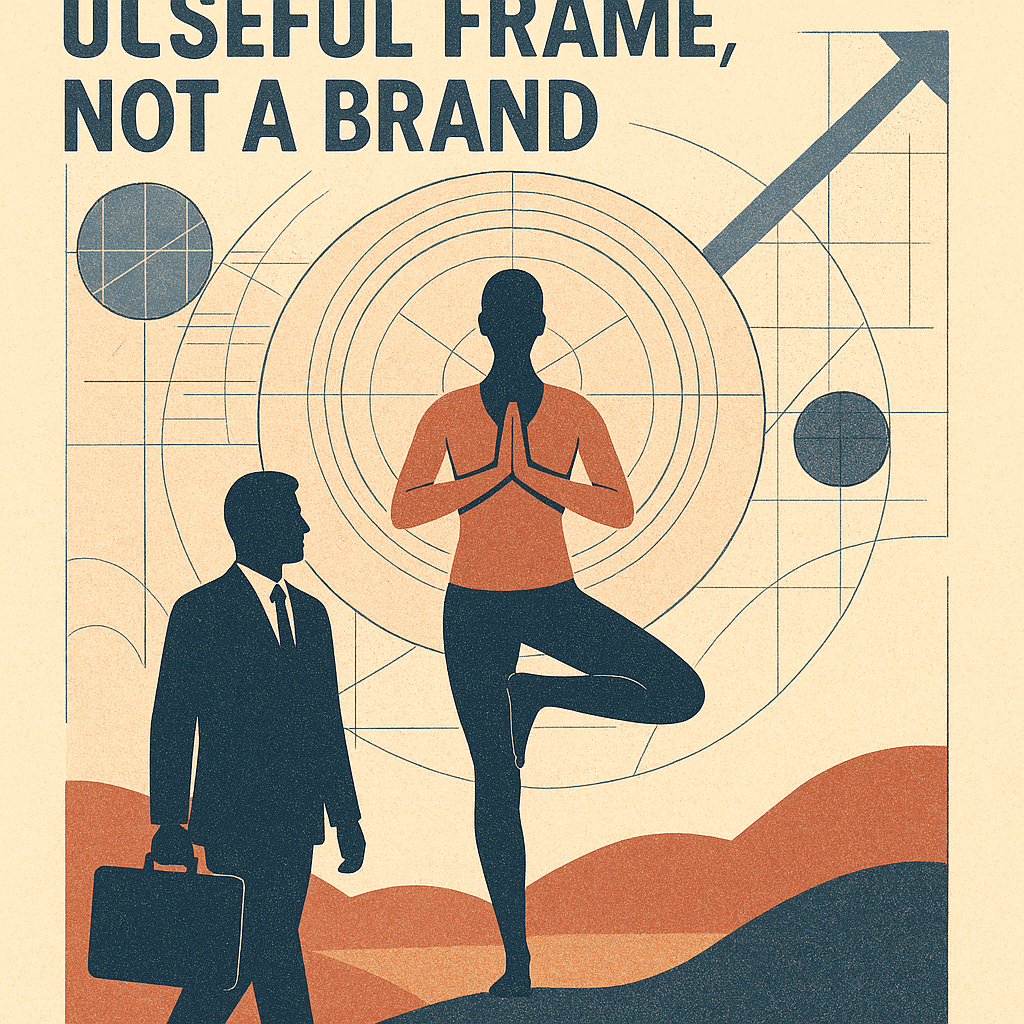
“Yoga executive” sounds like a LinkedIn invention. It half is. The phrase came out of trying to describe how a serious practitioner approaches life — vision, agency, adaptability — without resorting to the usual self-help vocabulary.
The principles aren’t new:
- Visionary thinking is dharana — sustained attention on what matters
- Yogic agency is sankalpa — intention as a daily practice
- Systems thinking is recognizing that asana, breath, mind, sleep, work, and relationships are one system
- Adaptability is what eight limbs build over years
- Discernment is viveka — telling the real from the apparent
- Balance is sthira-sukha — steady and at ease
What changes when you frame it this way is access. The Sanskrit can be a barrier for people who’d otherwise benefit from the practice. Calling it executive thinking lands with people who’d never read the Sutras.
That’s the use case. Not to corporate-ify yoga. To borrow corporate vocabulary as a side door so the underlying practice can do its work.
The risk is the door becomes the whole thing. People stop at the framework and never make it to the practice. Then “yoga executive” becomes another LinkedIn brand and the original meaning evaporates.
Used carefully, the frame is useful. Used carelessly, it’s another thing to sell.
The test is simple: does the frame point you back to actual practice — sitting, breathing, working with a teacher, reading the source texts — or does it replace those things? If it replaces, you’ve got a self-help product. If it points, you’ve got a useful door.
From Video: What Is a Yoga Executive? on michaeljoelhall.com