
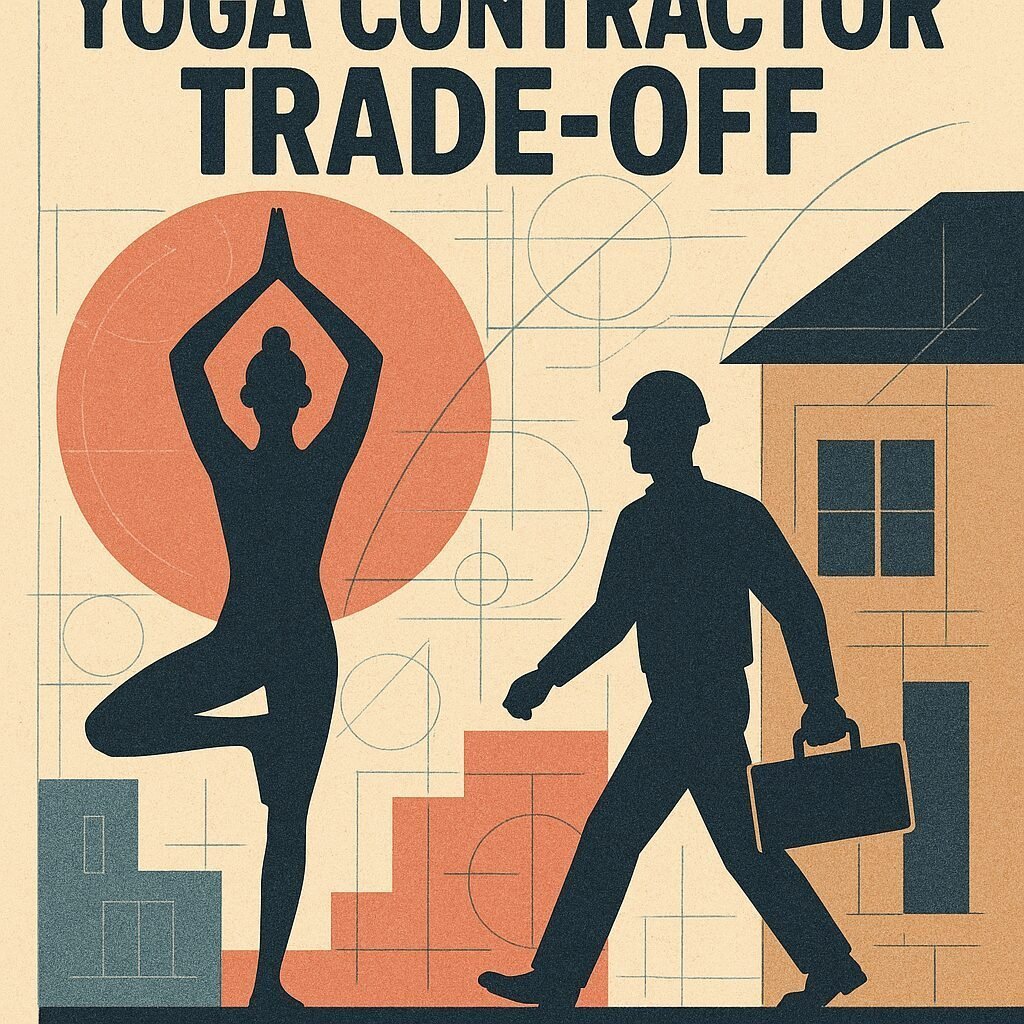
Most yoga jobs in the US are 1099 contractor positions. That’s the default, not a choice you opted into. Studios use it to avoid payroll taxes, benefits, and labor law.
The upside is real: you choose your schedule, your style, your studios. You can stack classes across cities, take a month off without asking, run your own retreats on the side.
The downside is also real and gets glossed over. No health insurance. No paid sick leave. No employer retirement contribution. You owe self-employment tax — 15.3% — on top of regular income tax. If you teach in someone else’s studio, you have less creative control than the contractor framing implies.
The math depends on rate. A $50 class with no benefits is not equivalent to a $35 class with full coverage. People run the wrong comparison and feel underpaid for the wrong reason. Run a real number: hourly rate × classes per week × weeks per year, minus self-employment tax, minus health insurance you have to buy yourself, minus retirement you have to fund yourself. That’s your actual income.
Track expenses ruthlessly. Mileage, props, training, music subscriptions, the laptop you use for online classes — all deductible if you keep receipts. Most contractors leave thousands on the table by not bothering.
If you’re going to be a contractor, be a serious one. Otherwise the autonomy isn’t autonomy. It’s precarity with extra paperwork.
From Video: Pros & Cons of Being a Yoga Contractor: Is It Worth It? on michaeljoelhall.com